Buy on Amazon
As an Amazon Associate I earn from qualifying purchases.
Aloe Vera Gel for Face, Body, and Hair: A Practical Guide to Everyday Moisturizing
Choosing a skincare product can be challenging when you want something simple enough for everyday use but versatile enough to fit into different parts of your personal-care routine. Your face may need lightweight moisture, your body may feel dry after showering, and your hair or scalp may benefit from a product that does not leave a heavy, greasy feeling.
Aloe vera gel is a popular option in personal-care products because it has a lightweight texture and can be used as a moisturizing addition to certain skincare routines. However, not every gel has the same ingredients, texture, or intended uses. Understanding the product label and your own skin's needs is more useful than relying on broad claims such as “100% natural” or “suitable for all skin types.”
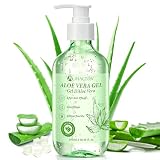
The AUKZON Aloe Vera Gel described in the supplied product information comes in a 300ml package and is marketed for use on the face, body, and hair. The seller describes it as a lightweight, fast-absorbing formula without alcohol or artificial colouring and promotes it for moisturizing and after-sun skincare. The listing also advertises use for dry skin, shaving-related discomfort, and certain haircare routines.
These are product claims rather than guarantees of results for every person. The complete ingredient list, individual sensitivities, and intended method of use should all be considered before introducing a new skincare product.
This guide explains what aloe vera gel can offer as part of a cosmetic routine, how to evaluate the advertised features, and what to check before choosing a product for your face, body, or hair.
What Is Aloe Vera Gel?
Aloe vera is a plant commonly used in personal-care products. Its inner-leaf gel contains water and naturally occurring substances, and it is used as an ingredient in various skincare formulations.
Commercial aloe vera gels are not necessarily identical. Some products contain a high proportion of aloe-derived ingredients, while others combine aloe with moisturizers, preservatives, stabilizers, fragrance, or other ingredients that help create the finished formula.
This distinction matters because a product's performance depends on its complete formulation, not simply on the presence of aloe vera.
For example, two gels may both contain aloe vera but differ in thickness, absorption, fragrance, shelf life, and how they feel on the skin. A formula that feels comfortable on one person's face may feel sticky or irritating to someone else.
Aloe vera gel should also not be confused with sunscreen, a dedicated eczema treatment, or a product specifically formulated to treat burns. A cosmetic moisturizer may help maintain skin hydration or provide a soothing sensation, but it should not replace appropriate medical care when a skin problem requires professional assessment.
Understanding the AUKZON Aloe Vera Gel
The supplied listing describes AUKZON Aloe Vera Gel as a 300ml product intended for facial, body, and haircare routines.
Its advertised features include:
A lightweight gel texture intended to absorb quickly
Claims of natural aloe vera ingredients and 99% purity
A formula described by the seller as free from alcohol and artificial colouring
Intended cosmetic use on the face and body
Suggested use in selected haircare routines
Marketing for moisturizing and after-sun skincare
A recommendation to conduct a skin test if you are allergic to aloe vera
These details offer a starting point for comparing the product with other gels, but they do not independently establish the exact ingredient percentages, safety for every skin type, or effectiveness for a particular condition.
The phrase “99% pure” needs to be interpreted using the manufacturer's precise definition. Without a complete ingredient breakdown, it is not possible to establish exactly what that percentage represents. Likewise, a claim of natural ingredients does not mean that a product cannot cause irritation or an allergic reaction.
Before purchasing, check the full label, ingredients, directions, storage instructions, and any precautions supplied by the manufacturer.
Why a Lightweight Gel May Appeal to Everyday Skincare Users
Texture can be an important consideration when choosing a moisturizer. Some people prefer richer creams, while others prefer gels that feel lighter after application.
A lightweight gel may appeal to people who dislike the heavier sensation of some lotions. It may also be convenient for use on selected areas of the body or as part of a routine involving several skincare products.
The AUKZON listing describes its gel as fast-absorbing and non-sticky. These are subjective product-performance claims, so the actual feel may differ depending on how much is applied, the surrounding temperature, the condition of the skin, and the rest of the formula.
A product that feels comfortable on dry arms may not necessarily work equally well for every face or scalp. Skin type, sensitivity, existing products, and personal preference can all influence the experience.
If you are trying a new gel, begin with a small amount on an appropriate area and observe how the skin responds. You do not need to apply a large quantity to determine whether the texture suits your routine.
Using Aloe Vera Gel on the Face
Facial skincare requires particular attention because the face can be exposed to several products each day, including cleansers, moisturizers, sunscreen, makeup, and treatments.
Aloe vera gel may serve as a lightweight cosmetic product for people who like a simple, water-based texture. Depending on the formula, it may be used as an additional moisturizing step rather than a replacement for every other product.
The AUKZON listing promotes facial use and describes the gel as a possible face-serum-style product. However, calling a gel a serum does not establish that it provides the same ingredients or performance as a formulated facial serum.
Before applying it to the entire face, review the ingredient list and consider your own skincare needs. People prone to sensitivity may need to be especially cautious with products containing fragrance, botanical extracts, or ingredients they have reacted to before.
Avoid getting the product into the eyes or applying it to broken or irritated skin unless the product instructions or a qualified healthcare professional specifically indicate that this is appropriate.
If you already use active skincare ingredients or prescription treatments, introduce new products cautiously to help identify the cause if irritation occurs.
Moisturizing the Body with Aloe Vera Gel
Body skin can feel dry for several reasons, including frequent washing, low humidity, weather changes, and exposure to products that remove some of the skin's natural oils.
A moisturizer can be useful after bathing because it helps support skin hydration. The type of moisturizer that works best depends on how dry your skin is and how you prefer a product to feel.
A lightweight aloe vera gel may be appealing when you want a less rich texture. For some people, however, a gel alone may not provide enough moisture, particularly on very dry areas such as the elbows, knees, hands, or lower legs.
One practical approach is to apply an appropriate moisturizer to slightly damp skin after bathing. If you prefer a gel, observe whether your skin continues to feel comfortable or becomes dry again soon afterward.
The AUKZON listing describes the product as a general-purpose moisturizing option. That does not mean it is guaranteed to meet the needs of every skin type, so consider the formula and your personal response rather than relying only on the product's broad suitability claims.
Aloe Vera Gel and After-Sun Skincare
After spending time outdoors, skin may feel warm, tight, or dry. A suitable moisturizer containing aloe vera may help soothe the feeling of sun-exposed skin, but it is important to distinguish cosmetic comfort from treatment of a significant sunburn.
The AUKZON product listing markets the gel for after-sun use and claims a cooling, soothing effect. These claims should not be interpreted as proof that this specific product treats burns or prevents sun damage.
If your skin has been exposed to excessive sunlight, first move out of the sun and allow the skin to cool. Avoid further sun exposure while it is recovering. A suitable moisturizer may help relieve discomfort, but a cosmetic gel does not replace adequate sun protection.
Use sunscreen, sun-protective clothing, and shade to reduce future exposure. Aloe vera gel does not automatically provide ultraviolet protection, so do not use it as a substitute for sunscreen.
Seek medical advice for severe symptoms, widespread blistering, worsening pain, fever, or other concerning reactions. Do not apply a new cosmetic product to badly damaged skin simply because the packaging mentions after-sun care.
What Does “100% Natural” or “99% Pure” Mean?
Natural-origin ingredients are often highlighted in skincare marketing, but these phrases need careful interpretation.
“Natural” may refer to the source of particular ingredients or how a manufacturer describes the formulation. It does not automatically establish that the product is safer, more effective, hypoallergenic, or suitable for every skin type.
Similarly, “99% pure” is not sufficiently precise on its own to explain the composition of a finished cosmetic. The manufacturer would need to clarify what is being measured and how the percentage is determined.
The listing also describes the product as free from alcohol and artificial colouring. These statements may help shoppers compare formulas, but they do not provide a complete view of the product's ingredients.
When choosing skincare, the full ingredient list is more informative than a few highlighted claims on the front of the package. Consider what is included, whether any ingredients are unsuitable for you, and whether the product has clear directions and appropriate warnings.
If you have previously reacted to aloe vera or another botanical ingredient, do not assume that a natural formulation will be automatically comfortable for your skin.
Aloe Vera Gel for Hair and Scalp Care
The product is also marketed for selected haircare uses, including application to the hair and dry scalp.
Some people prefer lightweight leave-in products to richer oils or creams, particularly when they want to avoid a heavy feeling. Whether an aloe-based gel works for your hair depends on the full formula, your hair texture, scalp condition, and how much product you use.
The supplied information does not establish that this specific gel promotes hair growth, treats dandruff, or improves a medical scalp condition. Those claims should not be inferred from the presence of aloe vera.
If you decide to use the gel on your hair, begin with a small amount and follow the product instructions. Avoid applying it to an irritated or damaged scalp without appropriate guidance, and discontinue use if itching, redness, or discomfort develops.
A product that feels suitable on hair lengths may not necessarily suit the scalp. The two areas can have different needs, so assess them separately.
Is Aloe Vera Gel Suitable for Every Skin Type?
The AUKZON listing describes the product as suitable for all skin types, but individual skin responses can vary.
People with dry skin may be interested in lightweight moisture, while those with oily skin may prefer a less rich texture. People with sensitive skin may need to pay closer attention to the complete ingredients and any previous reactions to botanical products.
No single formula can be assumed to suit everyone simply because it is labelled for all skin types.
A useful first step is to review the ingredient list and follow the product's patch-testing guidance. Apply a small amount to a limited area as directed, then observe for signs of irritation before expanding use.
Stop using the product if you develop persistent redness, burning, itching, swelling, or a rash. If symptoms are significant or do not improve, seek appropriate medical advice.
If you have a diagnosed skin condition or use prescription skincare treatments, consult a qualified healthcare professional when you are unsure whether a new cosmetic product is appropriate.
Safety Considerations for Children and Pets
The product listing suggests that the gel may be suitable for children and pets. However, that broad claim should not be treated as a guarantee of suitability for either group.
Children can have different skincare needs from adults, and a cosmetic product should only be used according to its label and appropriate age guidance. Check the full ingredients and avoid using the product on children if its instructions do not clearly support the intended use.
Pet safety requires separate consideration. A human cosmetic product should not automatically be applied to an animal's skin or coat. Pets may lick treated areas and ingest the product, and some ingredients in cosmetic formulations may not be appropriate for them.
Do not use this gel on pets unless a veterinarian confirms that the specific formulation is suitable. Keep the product out of reach of children and animals, and seek professional advice if accidental ingestion or an unexpected reaction occurs.
The absence of alcohol or artificial colouring, if confirmed by the manufacturer, would not by itself establish that a cosmetic product is suitable for pets or children.
Potential Advantages
A versatile cosmetic format
The product is marketed for use on the face, body, and hair. This may appeal to people who prefer one gel for several suitable personal-care applications, provided the instructions support each intended use.
Lightweight texture
The seller describes the formula as quick-absorbing and non-sticky. This may suit people who prefer a gel texture, although the actual feel is subjective and cannot be guaranteed for every user.
A 300ml package
A 300ml container may be convenient for regular personal-care use. The practical value depends on how much product you apply, how frequently you use it, and the product's shelf life after opening.
Marketing focused on aloe vera
The aloe vera theme may appeal to shoppers who prefer this ingredient in their skincare routine. The complete formulation still matters more than the ingredient name alone.
A patch-test reminder
The supplied listing specifically advises testing the product if you have an aloe allergy. More generally, checking for individual sensitivity is a sensible precaution when introducing a new cosmetic.
Things to Consider Before Buying
Check the full ingredient list
The supplied description does not provide the complete formulation. Review the package or manufacturer information before deciding whether it suits your skin or hair.
Avoid relying on broad purity claims
Terms such as “100% natural” and “99% pure” need a clear definition. They do not independently prove safety, quality, or effectiveness.
Do not treat it as a sunscreen
Aloe vera gel does not automatically provide UV protection. Use appropriate sun-protection measures when outdoors.
Understand the limitations of after-sun claims
A cosmetic gel may offer a soothing or moisturizing experience, but this does not establish that it treats a burn or other medical condition.
Patch testing does not eliminate every risk
A small-area test may help identify some reactions, but it cannot guarantee that irritation or allergy will never occur.
Do not assume it is safe for pets
Human skincare products may be unsuitable for animals, particularly if they can lick the treated area. Ask a veterinarian before applying the gel to a pet.
A Practical Checklist Before Ordering
Before choosing an aloe vera gel, consider these points:
Read the ingredients. Check the complete formula rather than relying only on the front-label claims.
Confirm the intended uses. Make sure the manufacturer supports your planned application on the face, body, or hair.
Consider your skin type. Think about whether a lightweight gel is likely to meet your moisturizing needs.
Follow the patch-test guidance. Test a limited area as directed and stop if a reaction develops.
Understand after-sun limitations. Do not rely on the gel as a sunscreen or as a substitute for medical care when needed.
Check the container size and storage directions. Confirm the stated volume and any instructions about shelf life or storage after opening.
Use extra caution with children. Follow any age restrictions and keep the product away from the eyes and mouth.
Ask a veterinarian before pet use. Do not assume that a human cosmetic is safe for an animal simply because it contains aloe vera.
Frequently Asked Questions
1. What is aloe vera gel commonly used for?
Aloe vera gel is used in various cosmetic products, including moisturizers and skincare formulations. The appropriate use depends on the finished product's ingredients and instructions.
2. Is the AUKZON gel suitable for the face and body?
The supplied listing markets it for both uses. Check the complete label, follow the instructions, and consider your skin's sensitivity before applying it broadly.
3. Does aloe vera gel moisturize dry skin?
Aloe-based products may form part of a moisturizing routine, but results depend on the finished formula and individual skin needs. Some people with very dry skin may prefer a richer moisturizer.
4. Can I use aloe vera gel after sun exposure?
A suitable moisturizer containing aloe vera may help soothe sun-exposed skin. However, a cosmetic gel is not sunscreen and should not be relied upon to treat a serious sunburn.
5. Does “99% pure” guarantee quality?
No. The meaning of the percentage depends on the manufacturer's definition and evidence. Check the complete ingredients and product information before drawing conclusions about purity or quality.
6. Can I use aloe vera gel on my hair?
The listing promotes haircare use, but suitability depends on the formulation and your hair and scalp needs. Follow the label instructions and stop using the product if irritation develops.
7. Is this gel safe for children and pets?
That cannot be established from the supplied marketing description alone. Check the age guidance before using it on a child, and ask a veterinarian before applying a human cosmetic to a pet.
8. What should I do if the gel causes irritation?
Stop using the product and gently remove it if appropriate. Seek medical advice if the reaction is severe, persistent, or worsening.
Final Thoughts
Choosing an aloe vera gel involves more than looking for a natural ingredient or a large container. The complete formulation, texture, intended uses, personal sensitivity, and limitations of the product all matter.
The AUKZON Aloe Vera Gel is advertised in a 300ml package for face, body, and haircare, with claims of a lightweight texture, quick absorption, and use in after-sun routines. These details may help shoppers compare cosmetic products, but they do not guarantee suitability for every skin type or prove that the gel treats a medical condition.
Before buying, review the full ingredients, follow the manufacturer's directions, and patch-test when appropriate. Treat after-sun use as a cosmetic skincare application rather than a substitute for sun protection or medical care. Avoid assuming that a human aloe vera gel is safe for pets.
A suitable skincare product should fit comfortably into your routine, provide clear ingredient information, and be used within the limits described by its manufacturer.
Affiliate Disclosure: As an Amazon Associate I earn from qualifying purchases.


Comments
Comments
Post a Comment